The moment you get stuck
Somebody you care about says they want to try something new. Toys. Specifically. And suddenly you're spiraling. Maybe you worry it means they're not satisfied with you. Maybe you think wanting this means something's wrong with your relationship. Maybe you've got old beliefs about what toys mean, and they feel incompatible with how you see yourself or your partnership.
That hesitation is real. It's also not a reason to shut the conversation down.
Here's what I tell couples in my practice: the hesitation itself is information. It's telling you something worth exploring, but not in the way you might think. The toy isn't the issue. The conversation you're avoiding is.
Why hesitation shows up (it's not what you think)
Most people assume hesitation means "I don't want this." That's sometimes true. But more often, hesitation means one of three things.
First: you're worried about what it means about you. If your partner wants to use a lemon vibrator or other clitoral vibrator during sex, your brain might jump to "they need this because I'm not enough." This is the thought pattern that usually stalls everything. It's also almost never the actual reason. People want to explore toys for lots of reasons: curiosity, variety, sensation, because their body changes over time. None of those reasons are about you being deficient.
Second: you haven't separated the toy from the relationship. Toys feel threatening because they live in the same mental bucket as "infidelity" or "dissatisfaction." They're not in that bucket. A lemon vibrator is a tool. A vibrator, a clitoral suction toy, a lemon clitoral vibrator. These are as relationship-threatening as a back massager. The difference is consent and communication.
Third: you have old beliefs about what toys mean for your identity. Maybe you grew up thinking that if you needed a toy, you were broken. Or that your partner wanting one meant they saw you as inadequate. Or that real intimacy doesn't need external tools. Those beliefs are worth looking at. They're also worth questioning.
The conversation you actually need to have
Let's skip the part where you pretend to be fine with it and build resentment. Let's also skip the part where you say "absolutely not" and hurt them in the process. Here's the middle path.
Start here: "I'm interested in this, and I'm also nervous. Can we talk about why?"
That's it. You're not saying yes yet. You're not saying no. You're saying "I'm willing to understand this together."
Then ask your partner these questions. Seriously ask them, and listen without defending:
- What made you curious about this?
- What do you imagine it would feel like?
- Is there something you want from this experience that you haven't felt able to ask for?
- Does this have anything to do with being unsatisfied, or is it pure curiosity?
Their answers will tell you everything. Most of the time, you'll hear something like: "I've been thinking about what makes sensation feel different" or "I'm curious whether we could add variety" or "I read about how lemon vibrators work and it seemed interesting." You'll almost never hear: "You're not good enough."
Then flip it. Ask them to ask you: "What's making you nervous?"
Don't minimize it. Say the real thing. "I'm worried this means you're not satisfied" or "I think this challenges how I see myself in this relationship" or "I have old shame around needing or using toys." Name it. Saying it out loud shrinks it.

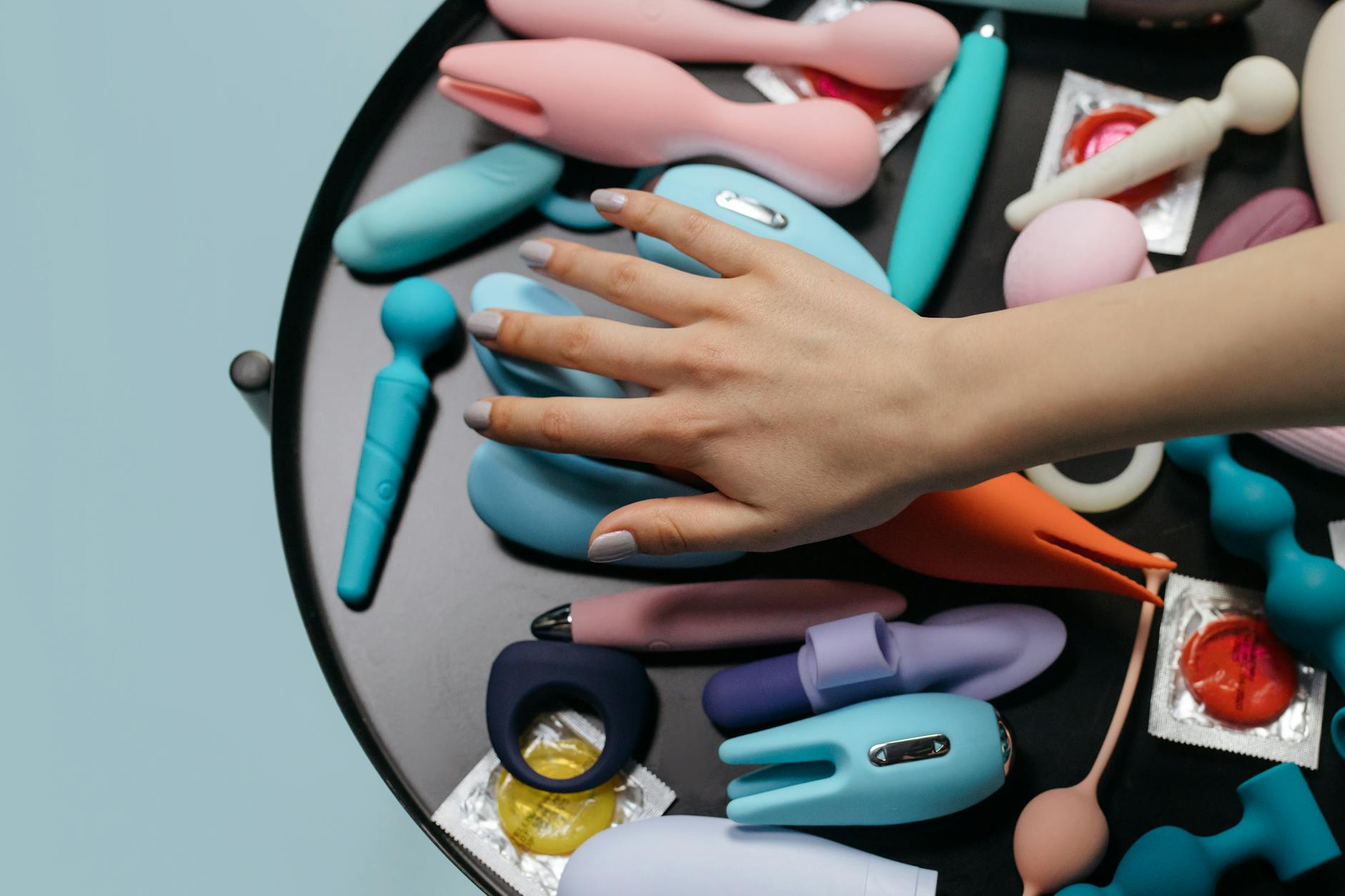
Photo by cottonbro studio on Pexels
Moving from hesitation to curiosity
Here's the thing about hesitation. It's not the opposite of yes. The opposite of yes is no. Hesitation is just "not yet." And "not yet" can become "okay, let's try this" if you take the middle steps.
After you've talked openly, you get to decide if you want to move forward. Here's how to do it in a way that builds trust instead of eroding it.
Start small and low-pressure. If you agree to explore toys together, you don't have to jump straight to using a lemon vibrator during partnered sex. You could:
- Look at options together online, no pressure to choose. Just talk about what appeals or doesn't.
- Hold the toy before anything sexual happens. Get familiar with the weight, the materials, how it feels in your hand.
- Use it together in a non-sexual context first. Lie in bed, talk, explore sensation without any expectation of orgasm or performance.
This matters because it keeps you in the driver's seat. You're not being done to. You're doing.
Make it collaborative. Don't let your partner decide everything while you white-knuckle through it. You get opinions too. You like this material, not that one. You want to try it at this tempo, not that one. The lemon vibrator, the clitoral vibrator, whatever you're exploring. You're curating the experience together.
Check in during. "Is this okay?" "Do you want to keep going?" "What feels good?" These aren't mood killers. They're trust builders. And they give you permission to say "I need to pause" without it being a referendum on the entire thing.
What happens when you use it together
Most couples are surprised by what they find. Not because the toy itself is magic. Because the conversation that had to happen first unlocked something.
You realized your partner wasn't trying to replace you. You realized your old beliefs about what pleasure looks like were smaller than you thought. You realized your partner was willing to slow down and listen to your hesitation instead of steamrolling over it. That builds intimacy faster than any toy can.
Then the actual sensation part happens. Maybe your partner discovers that lemon clitoral vibrators work differently than traditional vibrators for their body type. Maybe you discover that sensation feels less threatening when you're present and communicating instead of braced for judgment. Maybe you find out you actually like the experience, and your hesitation was just unfamiliarity.
Or maybe you try it once and decide it's not for you. That's fine too. The win isn't "you learned to love toys." The win is "you learned to talk about hard things without shame."
The hesitation that's actually a no
I need to be clear about something: hesitation and refusal are different. If your answer is actually "I don't want to do this, period," you get to say that. You don't have to talk yourself into pleasure you don't want.
But "I don't want to" and "I'm scared so I'm saying no" are also different. Only you know which one is true.
If you genuinely don't want to use toys, ever, that's valid. You and your partner then get to decide if that's a dealbreaker for them or if they can respect that boundary. Both choices are legitimate. But make that decision from a place of clarity, not fear.
Most people find that a real conversation moves them from "absolutely not" to "maybe" to "actually, this was interesting." Not because they're weak. Because fear feels smaller when somebody's listening.
When the hesitation is bigger
If your hesitation comes from past trauma, deep shame about your body or sexuality, or relationship patterns you recognize as unhealthy, this might be bigger than a conversation alone can fix. That's what a therapist is for. There's no shame in that either.
A good couples therapist or sex therapist can help you work through why a simple request triggered such a strong reaction. They can help you understand if this is really about the toy, or if it's about trust, or about old wounds. And they can help you figure out what you actually want, separate from what you think you should want.
Your hesitation matters. And so does your partner's curiosity. You don't have to choose between them. You just have to be willing to talk.
FAQ
What if my partner thinks I'm rejecting them by saying I'm hesitant?
That's where the conversation matters. Hesitation isn't rejection. It's "I need to understand this more before I say yes." If your partner can't hear the difference, that's a relationship issue bigger than toys. You might benefit from a conversation with a couples therapist about how you both handle vulnerability and different preferences.
Is it normal to feel like a toy would replace me in my relationship?
Completely normal. But it's also not how toys work. A lemon vibrator doesn't replace anything. It's a tool your partner can use alone, with you, or in combination with partnered touch. It exists in addition to you, not instead of. If that fear persists, it usually points to something about trust or security in the relationship that's worth exploring separately from the toy conversation.
If I agree to try it and I hate it, can I say no next time?
Yes. Absolutely. Trying something once doesn't create an obligation to repeat it. "I appreciate you wanting to explore this together, and I don't think this is for me" is a complete sentence. Your partner's job is to respect that. If they pressure you after you've said no, that's not about toys. That's about consent in your relationship, and it's worth taking seriously.
How do I know if my hesitation is actually intuition telling me something's wrong?
Intuition usually shows up as a specific feeling about a specific thing. "I feel unsafe in this relationship" is intuition. "This toy idea makes me uncomfortable because I have old beliefs I want to examine" is something else. The discomfort itself isn't the signal. Pay attention to whether the discomfort eases when you understand the actual situation better. If it does, it was fear. If it doesn't, your intuition might be pointing at something real about your relationship that needs work.
What if my partner gets impatient with my hesitation?
That tells you something important about how they handle your needs. If they can't slow down for a conversation about intimacy, that's a pattern worth noticing. A partner who respects you will respect your pace. They might feel disappointed, but they'll be willing to give you time. If impatience turns into pressure, that's not about the toy. That's about how they treat your autonomy. That's a bigger conversation.
Can hesitation turn into genuine enthusiasm, or will I always resent this?
Yes, hesitation can absolutely turn into enthusiasm. But only if the shift happens naturally as you understand things better, not because you're forcing yourself. Some people try toys and realize they love them. Some people try once and decide it's not their thing. Both are fine. What matters is you decide from a place of actual choice, not obligation or fear.
The real point
Hesitation isn't a problem to solve quickly. It's information. Your body and your mind are telling you something matters here. That something might be "I need to feel more secure in this relationship before I try new things." It might be "I have beliefs about my sexuality I want to reexamine." It might be "I need my partner to prove they're willing to listen when I'm scared."
All of those things deserve attention. None of them are solved by just doing the thing anyway.
So start with the conversation. Ask the questions. Listen to the answers. Let yourself be heard. And then decide from a place of clarity, not fear.