Here's what nobody tells you: lower libido and vaginal dryness often show up together, and they create a vicious cycle. Low desire means less arousal. Less arousal means less natural lubrication. Less lubrication means friction that feels uncomfortable, which tanks desire even further. You're stuck.
Then you add guilt on top—the feeling that you "should" be interested, that your body is failing, that you're failing your partner. That makes everything worse.
But here's the thing: a lemon vibrator actually breaks this cycle in two ways at once.
They're not separate problems. They're connected through your nervous system.
When your brain isn't sending strong arousal signals, your vaginal tissues don't get the blood flow and lubrication response they need. That's not a flaw. That's how the system works. But when you try to have sex anyway—because you think you should, or because your partner wants to—the lack of lubrication creates discomfort. Your nervous system reads discomfort as danger. Arousal drops further. The cycle tightens.
Add in hormonal shifts, stress, medication side effects, or relationship strain, and that cycle becomes nearly impossible to break through willpower alone.
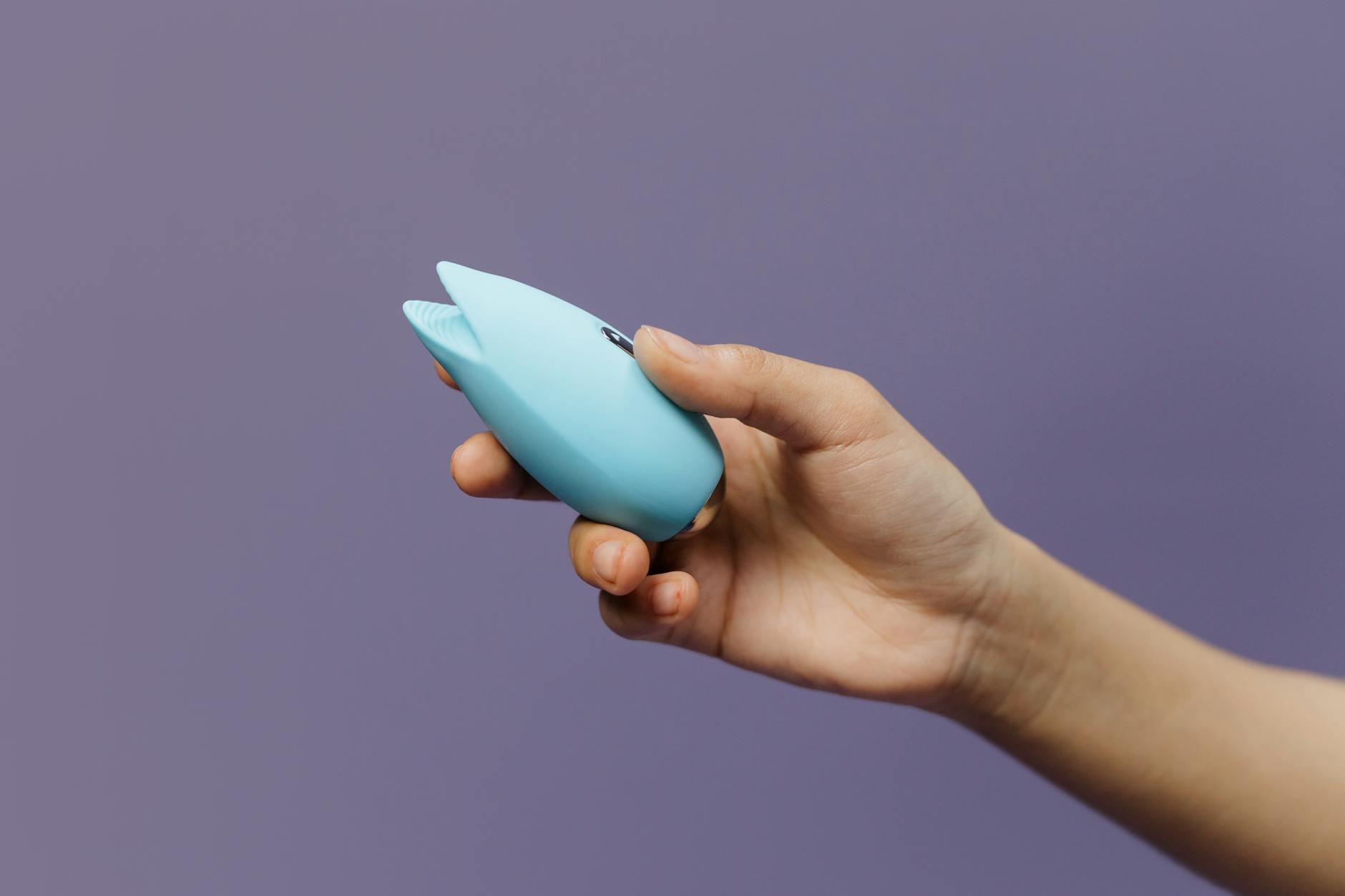
A lemon clitoral vibrator—especially one with suction like the Lem—works differently than traditional vibration. Instead of relying on friction, suction creates gentle pressure that stimulates the clitoral nerves without requiring as much of your own arousal machinery to fire first.
Translate that: you don't have to wait for desire to build naturally. You don't have to create lubrication before you can enjoy sensation. The lemon vibrator creates pleasure from a cold start.
That matters because it interrupts the shame cycle. Instead of "I should want this," the experience becomes "Oh, this actually feels good." Your nervous system receives genuine pleasure signals instead of obligation signals. That's the reset point.
If you're using a lemon vibrator with lower libido, timing and setup matter more than the toy itself.
Start when you're already a little calm. Not trying to get aroused. Just relaxed. Post-shower, after a walk, after tea. Your nervous system needs to be out of threat mode. Arousal lives in the parasympathetic nervous system. Stress, pressure, and deadline thinking live in the sympathetic. One of those has to lose.
Use lube anyway. This is the part that trips people up. "If I use lube, doesn't that mean I'm not actually aroused?" Nope. Lube is a tool. It makes sensation clearer, not cheating. Combine a lemon sexual toy with water-based lubricant and you're stacking the deck in your favor. Dryness stops being a friction problem. Now sensation is purely about pleasure, not about irritation.
Expect arousal to build slowly. With lower libido, arousal often doesn't follow the curve you remember. It doesn't ramp up sharp and fast. Instead it's gentle, incremental, sometimes with plateaus. That's completely normal. Don't read slow arousal as "it's not working." Read it as your system actually engaging.
Start at lower intensity. On the Lem or any suction lemon vibrator, begin at pattern 1 or 2. Let your body get used to the sensation. After a few minutes, increase. This gradual escalation mirrors how arousal actually builds when libido is low.
Vaginal dryness when libido is low is its own challenge because you can't "lube your way to arousal." Well, you can, but it feels empty without the underlying desire.
With a lemon clitoral vibrator, dryness matters less because the action is happening at the clitoris, not inside the vagina. The clitoris doesn't need vaginal lubrication to work. It's external, it's accessible, and suction stimulation doesn't require the friction that makes internal dryness feel uncomfortable.
If you do want internal involvement later (with a partner, or because it feels good), you still use lube. But the entry point—the thing that gets your nervous system back online—isn't dependent on natural lubrication.
This is why so many people with lower libido plus dryness find lemon adult toys like the Lem transformative. You're not fighting the dryness. You're working around it entirely.
If you're in a relationship and both of you are dealing with your lower libido plus dryness, the conversation matters as much as the toy.
Honest version: "My libido is lower right now and that's real. My body also isn't lubricating easily. Instead of us both trying to force something that's not there, I want to explore what actually feels good to me. I'd like you to be part of that."
This reframes the problem. You're not trying to perform. You're problem-solving together.
Then use the lemon vibrator solo first, find what feels good, bring your partner in once you know your own signal. They can watch, learn your preferences, touch you elsewhere while you use the toy, or use it on you. The power dynamic shifts from "I have to be aroused" to "we're figuring this out together."
Sometimes lower libido plus dryness aren't just about stress or relationship flux. Antidepressants, hormonal birth control, and post-breastfeeding hormone crashes all genuinely suppress both desire and lubrication.
If that's your situation, a lemon clitoral vibrator is even more relevant because you're essentially working with your neurology directly. You're bypassing the hormonal or neurochemical gap and stimulating the pleasure pathways that still exist, even when the motivation feels gone.
That's not a workaround. That's working with reality.
Here's what I see clinically that doesn't get talked about: when someone with lower libido actually experiences genuine pleasure from a lemon vibrator, their relationship to their own body shifts.
The story changes from "my body doesn't work" to "my body needs a different kind of input." That's huge. It moves from shame to information. From broken to different.
And when your nervous system remembers what pleasure actually feels like, desire often builds from there. Not always immediately. But the pathway opens. You remember that you're capable of sensation. That you deserve it. That there's nothing wrong with needing tools, lube, time, and the right setup.
Stumble 1: Using a lemon vibrator and feeling nothing. This usually means either the intensity is too high (overwhelming your low-arousal system) or too low (your tissues need more stimulation). Try one pattern level above where you are. If that's too much, wait a few days and try again. Your nervous system adapts.
Stumble 2: Using lube and feeling "fake" about it. Lube is information, not fraud. It tells your body "this is safe, this feels good." That's the whole point when arousal is genuinely low.
Stumble 3: Expecting your libido to roar back after one session. Lower libido is a process. One good experience with a lemon sexual toy is a data point, not a full reset. But it's evidence that you're still capable. That matters.
Stumble 4: Using it while stressed about whether it's working. Performance anxiety kills everything. Set a low bar: "I'm going to spend 10 minutes touching myself with a toy and see what happens." Not "I'm going to fix my libido." The smaller goal wins.
If lower libido has been consistent for more than a few months, or if it started suddenly and you can't pin it to stress or a medication change, that's worth a conversation with a doctor. Thyroid issues, iron deficiency, and other conditions can tank libido and dryness together.
Your GP can rule out the medical stuff. Then the work becomes about nervous system regulation, relationship dynamics, and sometimes therapy.
A lemon vibrator isn't a substitute for that conversation. It's a tool you use while you're having it.
Yes. Antidepressants suppress desire and lubrication in about 40% of people who take them. A lemon clitoral vibrator bypasses that gap—it stimulates pleasure nerves directly, independent of the hormone or neurochemical suppression. Start low, use plenty of lube, and give yourself a few sessions to adjust.
Nope. Pleasure is pleasure, regardless of how it arrives. Your nervous system doesn't distinguish between "authentic" and "assisted" sensation. It just registers "feels good." And when your body feels good, desire often follows.
Start solo. Figure out what feels good when there's no pressure. Once you know your own pleasure, bringing your partner in becomes collaborative rather than performative. Solo exploration gives you data you can share: what speed, what pressure, what patterns actually work for your body.
More than you think. Dryness means start with a quarter-sized amount, then add more as you go. Water-based lube works best with silicone toys. The goal isn't "feel wet." It's "no friction irritation so I can focus on pleasure." That often means more lube than you'd use if your body were naturally lubricated.
That varies wildly. Some people feel a shift in one week. Others take months. The honest answer: consistent pleasure, reduced pressure, and good communication move the needle. A lemon vibrator is one part of that. Stress reduction, sleep, relationship repair, and sometimes therapy are the other parts.
Not always. If dryness is from hormonal changes (menopause, post-breastfeeding, birth control), you might need topical estrogen. If libido is from depression or medication, you might need a doctor conversation. What the lemon vibrator does is interrupt the shame cycle and prove your body still works. That's the foundation. Everything else builds from there.