Let's name what's actually happening
You know the feeling. Your partner touches you, and the sensation is there, but the response isn't. Your body tenses instead of relaxing. Your mind checks out. Orgasm, which felt close moments before when you were alone, suddenly feels impossible. This isn't a you problem. It's a pressure problem.
Partner pressure is one of the least discussed orgasm killers because we've been taught to frame sex as inherently collaborative. But here's the truth: your nervous system doesn't care about the emotional narrative. If your brain registers judgment, expectation, or performance demand, your body downregulates. Blood flow redirects. The pathway to orgasm closes.
I see this constantly in couples work. One partner desperately wants the other to finish. That wanting gets transmitted as pressure, even when it's wrapped in tenderness. And that pressure, delivered with the best intentions, makes orgasm measurably harder.
How pressure actually changes your physiology
When you're alone with a lemon clitoral vibrator, your sympathetic nervous system (the accelerator) can stay engaged. You control timing, intensity, and whether you pause. There's no external person whose pleasure or feelings depend on your outcome.
With a partner present, even a well-meaning one, your brain activates threat-assessment mode. Neuroscientists call this the "dual control model" of sexual response. Some people are more sensitive to stimuli that activate the brakes (judgment, distraction, performance anxiety). If you're someone whose brake sensitivity is naturally high, adding a partner's presence can flip that brake to full lock.
The lemon vibrator solves this in a specific way. It gives you a tool that isn't your partner's body or attention. When you use it solo first, your nervous system learns the pathway to orgasm in an environment with zero performance demand. Then, when your partner is involved, the vibrator becomes the accelerator instead of them. This is a subtle but radical shift.
Why the lem works when other tools don't
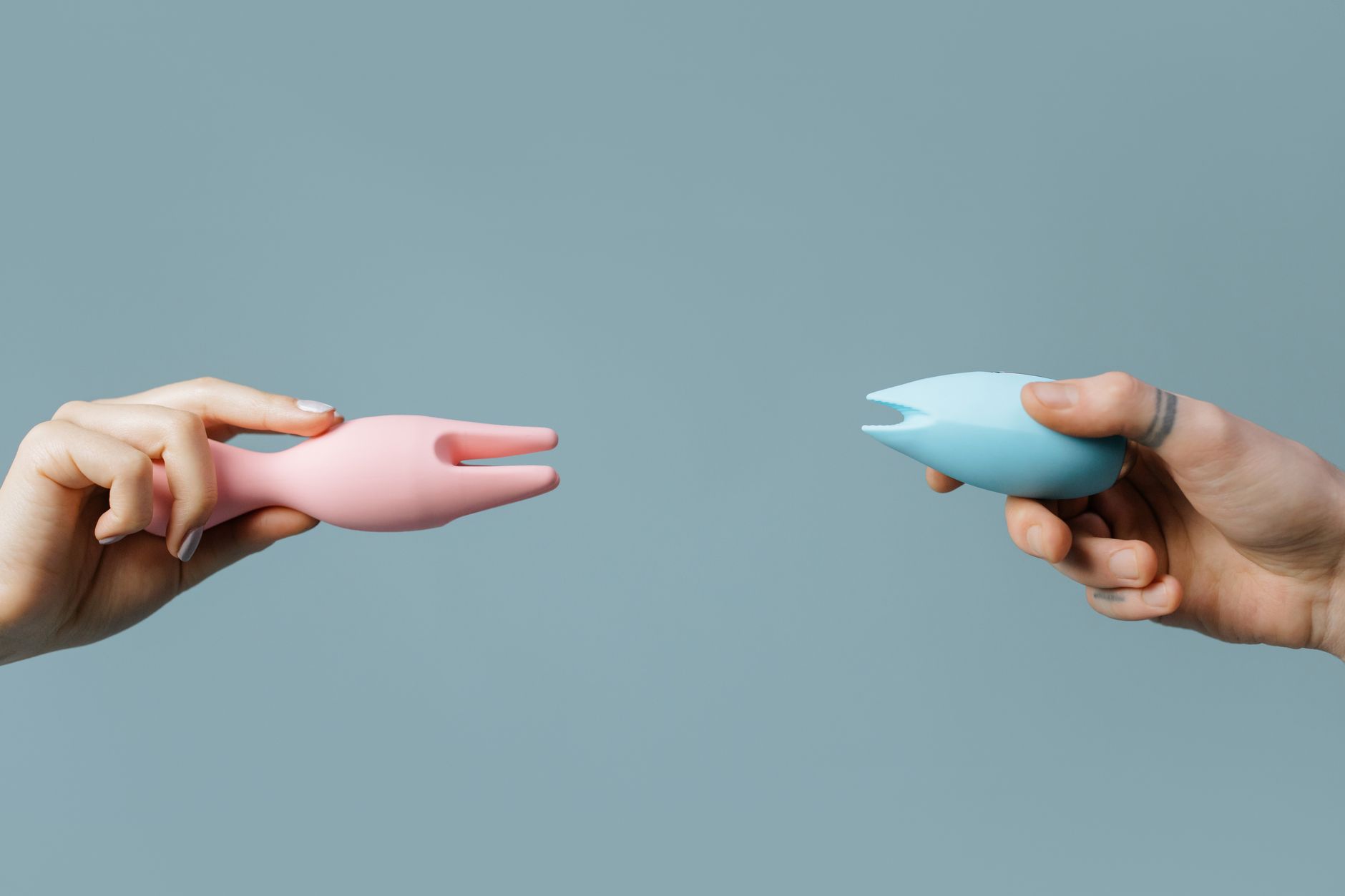
Traditional vibrators apply vibration directly, which can feel overwhelming if you're already in a state of nervous tension. The lemon vibrator uses suction instead. Suction doesn't require you to absorb the intensity. It pulls sensation inward rather than pushing it outward, which most people experience as less aggressive, more controllable.
This matters enormously for pressure situations. Because suction is gentler and more intuitive to use, you can focus on relaxation instead of managing stimulation. You don't have to grip it, angle it precisely, or worry about the vibration being too much. You just hold it in place and let it work.
Many people also report that the sensation of suction feels less "mechanical" than traditional vibration, which can help your brain relax its performance mode. It feels more like a person than a device, which paradoxically makes it easier to tune out your partner's presence and focus on your own body.
Using a lemon vibrator alone first (the crucial step)
Before you introduce it during partnered sex, spend at least three to five solo sessions getting to know your own response. This serves multiple functions. First, it teaches your nervous system that this device can get you to orgasm without anyone else in the room. That knowledge becomes anchoring.
Second, solo use lets you learn your own timeline. How long does arousal take to build? Do you need warm-up, or can you start slower and accelerate? Do you prefer a longer session with pauses, or continuous stimulation? Your partner will never need to know these specifics. But you'll know, and that knowledge is power.
Third, solo practice removes the newness factor. When you're figuring out how the device feels while also managing your partner's presence and expectations, your nervous system is split. After you've had orgasms with it alone, introducing a partner becomes additive, not novel.
Bringing it into partnered sex without performance pressure
The conversation with your partner matters more than the mechanics. Here's what I recommend saying something like:
"I want to use a vibrator during sex because it helps my body relax. It's not about you or anything you're doing. It's about my nervous system needing a specific kind of stimulus to let go. When I use it, I can actually be more present with you because I'm not in my head about whether I'm going to finish."
That framing shifts the story from "I need this because you're not enough" to "I need this so I can actually relax and enjoy you." Both are true, but only one invites your partner to collaborate instead of defend.
When you start using it together, ask your partner not to watch your face or check in about whether you're close. Ask them to focus on their own sensation, their own breath, whatever keeps them in their body. The moment they shift into observer mode ("Is she getting there?"), they re-activate your pressure system.
What to do if orgasm still doesn't happen
Sometimes pressure runs too deep. You might use the lemon vibrator with your partner present and still feel that clench, that checking-out sensation. This doesn't mean the vibrator failed. It means your nervous system needs more permission.
Try this: use the vibrator while your partner is in the other room. You're not alone for safety or relational reasons. You're just not being observed. This removes the performance pressure while keeping the connection. Many people find this is the bridge they need.
Alternatively, ask your partner to hold you from behind without looking. Physical connection without observation. Skin contact without visual witness. For some people, this combination finally lets the nervous system relax enough for orgasm to become possible.
If orgasm still feels distant, talk to a sex-informed therapist. Sometimes pressure around sex is connected to earlier experiences, relationship dynamics, or trauma. A vibrator is an excellent tool, but it's not a substitute for deeper work if that's what's needed.
The unexpected benefit no one mentions
After a few weeks of using a lemon clitoral vibrator during partnered sex, something shifts. Your partner stops centering your orgasm as the goal. They relax because they're not responsible for it anymore. And paradoxically, when the pressure lifts, orgasm often becomes easier.
I've watched couples cycle through this pattern. The partner stops watching. The pressure-sensitive person actually starts to enjoy sex more. Orgasm becomes an occasional bonus instead of a nightly negotiation. The relationship gets easier because sex stops being a place where both people feel like they're failing.
A lemon vibrator won't fix a relationship with serious underlying issues. But for couples where the main problem is performance anxiety and unspoken pressure, it can be genuinely transformative.
Moving toward pleasure without expectation
Here's what I want you to know. Your body doesn't owe anyone an orgasm. Not even yourself. Your worth as a partner, a lover, a person, has nothing to do with whether you finish during sex.
If your partner can't accept sex without orgasm as a valid, pleasurable outcome, that's a relationship problem, not a you problem. A good partner wants you to feel good. They don't need you to come to prove it works.
The lemon vibrator is a tool for reclaiming your own pleasure on your own terms. Use it solo first. Use it with a partner who can hold space for you without needing anything from your body. Use it to teach yourself what feels good when there's zero pressure. And then, maybe, watch what happens to your pleasure when the expectation finally goes away.
People also ask
Can I use a lemon vibrator if I've never had an orgasm with a partner?
Absolutely. In fact, a clitoral vibrator like the Lem is one of the best entry points for people who struggle with partner orgasms specifically. Start solo, build the neural pathway, then introduce it with a partner. The vibrator becomes evidence to your nervous system that orgasm is possible in your body. Once your brain knows that's true, partnered pleasure becomes easier to access.
Will using a vibrator make my partner feel inadequate?
It might, initially. Some partners feel replaced or worry the vibrator means they're not enough. The solution is clear, direct conversation. "This isn't about you. My body needs this specific stimulus to relax. When I use it, I can actually enjoy you more because I'm not stuck in performance mode." If your partner continues to feel threatened after that conversation, that's worth exploring, because it suggests their ego matters more than your pleasure. That's a relationship issue, not a vibrator issue.
How often should I use a lemon vibrator with my partner?
Whenever it helps you feel good. There's no rule. Some people use it every time they have sex. Some use it a few times a week. Some only bring it out when they're feeling particularly tense or when they know pressure is high. Listen to your body. If you're relaxing and enjoying yourself more with it, use it. If at some point you don't need it anymore, you can step back. The point is your pleasure, not the device.
What if I orgasm with the vibrator but not with my partner's body?
That's completely normal and doesn't mean there's something wrong. Many bodies need different things for orgasm versus pleasure. You might have orgasms with the vibrator and deep pleasure without it. Both are valid. The goal isn't to have every sexual experience end the same way. The goal is to have sex that feels good, pressureless, and connected. If that looks different than you expected, that's just you knowing yourself better.
Can pressure around orgasm actually damage a relationship?
Yes. When one partner's pleasure becomes the other's responsibility, resentment builds. The pressure-sensitive partner feels like they're failing. The other partner feels rejected. Both people stop enjoying sex. A tool like the lemon vibrator can interrupt that cycle by removing the pressure-creation dynamic. But the deeper work is helping both partners understand that good sex doesn't have a single definition of success.
How do I know if my pressure issue is about my partner or about me?
You'll know because your body will tell you. Try using the vibrator alone with your partner in the next room. If you relax and orgasm easily, the pressure is relational. If you still feel tense even alone, the issue might be internal (anxiety, trauma, medication side effects). Both are fixable, but they need different approaches. Relational pressure responds to communication and tools like the Lem. Internal pressure might need therapy or medical support. You might need both.
Take the pressure off
Your pleasure matters. Your body's timeline matters. Your need for a pressureless environment matters. A lemon vibrator isn't a magic wand, but it is a way to tell your nervous system that orgasm can happen when you decide it's safe. If you're ready to reclaim that, explore what works for you. And if you're carrying shame about needing help, let it go. Your body is not broken. It's just been trying to protect you from pressure that never should have existed in the first place.
References
Basson, R. (2001). "Human sex-response cycles." The Journal of Sex & Marital Therapy, 27(1), 33-43.
Janssen, P. L., Heiman, J. R., Gall, S. B., Rosen, R., & Meston, C. M. (2008). "Early development and validation of a four-item measure of sexual function in women." The Journal of Sexual Medicine, 5(6), 1418-1423.
Janssen, P. L., McBride, J., Wright, T., & Meston, C. M. (2015). "A dual-control model of sexual response in women and men: Implications for sexual desire and arousal." Current Sexual Health Reports, 7(3), 197-207.