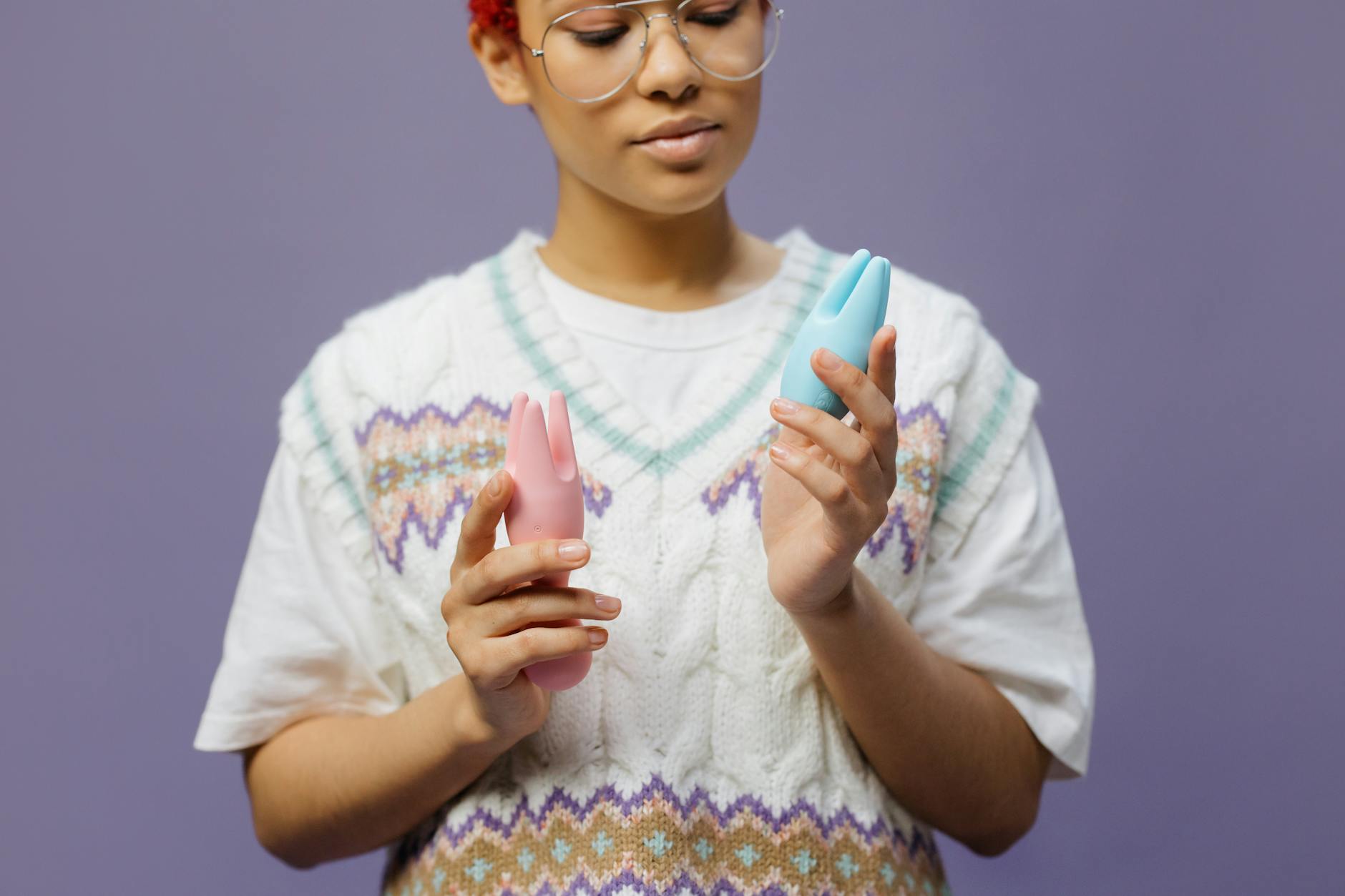
How to Use a Lemon Vibrator When Sensation Takes Time to Build After Antidepressants
SSRIs, SNRIs, and other antidepressants can mute arousal and delay orgasm. Here's how suction-based clitoral vibrators help restore pleasure—without fighting your medication.
Antidepressants save lives. They also flatten sensation, slow arousal, and make orgasm feel like it's happening in another room. Most people aren't told this happens. Most prescribers don't ask about it. And most people suffering from delayed sensation assume something is wrong with them, not with their chemistry.
Here's what I see in my practice: people who start antidepressants and suddenly find their pleasure response has dimmed. A touch that used to spark arousal now feels like background noise. Orgasm takes three times as long, or doesn't arrive at all. The frustration isn't just sexual—it's grief. It feels like losing a part of yourself in exchange for mental stability.
But here's the thing: you don't have to choose between medication and pleasure. You just need a different strategy.
Antidepressants work by changing serotonin and norepinephrine levels in the brain. That's great for anxiety and depression. It's less great for the chain of events that leads to arousal and orgasm, which rely on dopamine and norepinephrine firing in a specific sequence.
Most people on SSRIs (like sertraline or paroxetine) report one or more of these:
Arousal takes longer to build—sometimes 20-40 minutes instead of 5-10
Orgasm feels distant or muted, even when stimulation is intense
Sensation feels numb at the clitoris specifically
The urgency or "wanting" part of desire goes quiet
Multiple orgasms become harder to achieve
It's not that pleasure is impossible. It's that the brain's signal is traveling through fog.
This is where clitoral vibrators—especially lemon suckers and air-suction devices like the Lem—make a measurable difference. Here's why: they work with your neurochemistry instead of fighting it.
Traditional vibrators buzz in a single mode, which can feel numbing after prolonged use. Your neurons habituate. The signal gets weaker, not stronger. Suction-based vibrators create a different kind of stimulation—they're mimicking oral sex at the nerve level, which triggers different neural pathways than vibration alone.
When sensation is muted by medication, suction-based technology bypasses some of that fog. It's not magic. It's simply a stronger, different signal sent to an already-quiet system. Many people find that lemon sexual toys help them achieve orgasm in 15-25 minutes instead of 45 or never.
I mean that. The moment you sit down thinking "I need to orgasm," your parasympathetic nervous system—the one that governs arousal—shuts down. Antidepressants already slow that system. Pressure speeds its shutdown. So first: detach from outcome.
Warm up for longer than you think you need.
Without medication, maybe you need 5 minutes of foreplay before you want direct clitoral stimulation. On antidepressants, budget 15-20 minutes of everything else: kissing, touching non-clitoral areas, being present. This isn't wasted time. Your brain needs runway to shift modes.
Start the lemon vibrator on its lowest pattern.
Many people make the mistake of jumping to high intensity, thinking "more power = faster result." It doesn't work that way. Start at pattern 1 or 2 on the Lem. Let your body register the sensation. After 3-5 minutes, move to pattern 3. After another 5 minutes, increase again. You're gradually raising the signal so your brain can actually perceive it, not jumping it so high that you habituate immediately.
Use it solo first, before partnered play.
This matters. When you're learning to use a lemon vibrator on antidepressants, partner presence can add pressure. You're already managing delayed sensation; you don't also need to manage "am I taking too long?" or "is my partner bored?" Spend 2-4 weeks using your vibrator alone, exploring what actually works for your body on this medication. Then, once you've found your rhythm, bring a partner in.
Lubrication is non-negotiable.
Antidepressants often cause vaginal dryness (serotonin affects genital blood flow). Water-based lube isn't optional—it's part of the setup. Apply generously, reapply every 5-10 minutes. This isn't a sign of dysfunction. It's a simple adjustment.
If you have a partner, here's the conversation that matters: "My medication is changing my arousal pattern. It's not about you or us. It's chemistry. I need us to slow down and spend more time on foreplay, and sometimes I'm going to use a toy to help bridge the gap between my brain and my body."
A secure partner responds with curiosity, not defensiveness. If your partner feels threatened by a lemon vibrator, that's a different issue entirely—and it's worth addressing before you layer medication side effects on top of it.
Many couples find that the shift actually deepens intimacy. When you slow down, you notice more. When you use a clitoral vibrator together, you're collaborating on pleasure instead of performing it.
Sensation doesn't snap back. If you've been on antidepressants for three months and your pleasure response has flattened, rewiring it takes time. You might see results in two weeks. You might need six. Some people find that after six months, their body has adapted and sensation returns partially on its own. Others find that combining a lemon clitoral vibrator with their antidepressant is simply their new normal—and that's fine too.
The point isn't to "get back to baseline." The point is to find what works for your body right now, on this medication, and not treat delayed sensation as a failure.
If orgasm is completely absent after 8-12 weeks on a new antidepressant, mention it. There are alternatives. Some people respond better to different SSRIs. Some find that taking the dose earlier in the day or splitting it helps. Some add a medication specifically for sexual side effects (like bupropion). Your prescriber should know this is affecting you—not because you need to change meds (you might not), but because they deserve to know the full picture of how the medication is landing.
One more thing: pleasure matters. It's not frivolous. It's part of your overall wellbeing. A good provider will take that seriously.
You deserve pleasure on antidepressants. That's not a luxury or a selfish ask. It's a basic part of being alive. A lemon vibrator isn't a substitute for managing your medication thoughtfully—it's a tool that acknowledges your neurochemistry and works with it instead of waiting for your body to "bounce back" on its own.
Many people find that once they've adapted to using a clitoral vibrator while managing medication side effects, that skill stays with them. Even if sensation eventually normalizes, they've learned something about their body and what actually turns them on. That's valuable knowledge.
Start slow. Use it solo. Be patient with yourself. And know that what you're experiencing is neurochemistry, not a deficiency in you.
Most medications are fine to use alongside a clitoral vibrator. If you're on blood thinners or have pelvic pain conditions, check with your doctor first. But antidepressants combined with a lemon sucker? That's actually a really common and safe pairing. Many people find they need the vibrator because of the antidepressant, so using them together is the whole point.
It depends on your body and the specific medication. Some people see improvement in 4-6 weeks. Others take 3-6 months for sensation to normalize. The frustrating answer is that there's no set timeline. What helps in the meantime is using a lemon vibrator to actively work with your body rather than waiting passively for things to "fix themselves." Many people find that sensation never fully returns to baseline—but that using a clitoral vibrator becomes part of their pleasure routine, which is totally fine.
Not in the same way. Your nervous system habituates to constant stimulation, but clitoral vibrators—especially lemon suckers with multiple patterns—keep changing the signal. The trick is varying the pattern and duration so you're not using the exact same setting every time. Switching between patterns 2, 4, and 6 on the Lem means your body isn't perceiving the same "constant" input that leads to habituation.
That's real. Some people's baseline genuinely shifts on long-term medication. Here's the reframe: you're not broken, and your pleasure isn't permanently lost—it's just different now. Using a lemon clitoral vibrator designed for delayed sensation means you're not waiting for your body to "fix itself." You're designing a pleasure life that works with your chemistry, not against it. That's actually more sustainable than chasing a pre-medication experience.
Absolutely. In fact, that's when it's most helpful. Start with a good water-based lubricant, apply generously, and reapply every 5-10 minutes. The lemon vibrator combined with added lubrication gives you both the different sensation you need and the moisture your body isn't producing on its own. It's a two-part solution to a two-part problem.
Yes, eventually. Not in a confessional way, but as simple information. "My antidepressant changes how quickly I build arousal. A lemon vibrator helps me get where I want to go faster." A partner who cares about your pleasure will get it. If they don't, that's a relationship conversation that goes deeper than the vibrator. Consider talking to a couples counselor about communication and intimacy during medication transitions.
Your pleasure matters. Medication changes things—but it doesn't end them. You're not alone in this, and you're not broken. You're just working with a different neurochemistry, and that's something you can actually plan for.
Ready to explore what works for you? We're here to help. Get in touch if you have questions about how a clitoral vibrator might fit into your life.