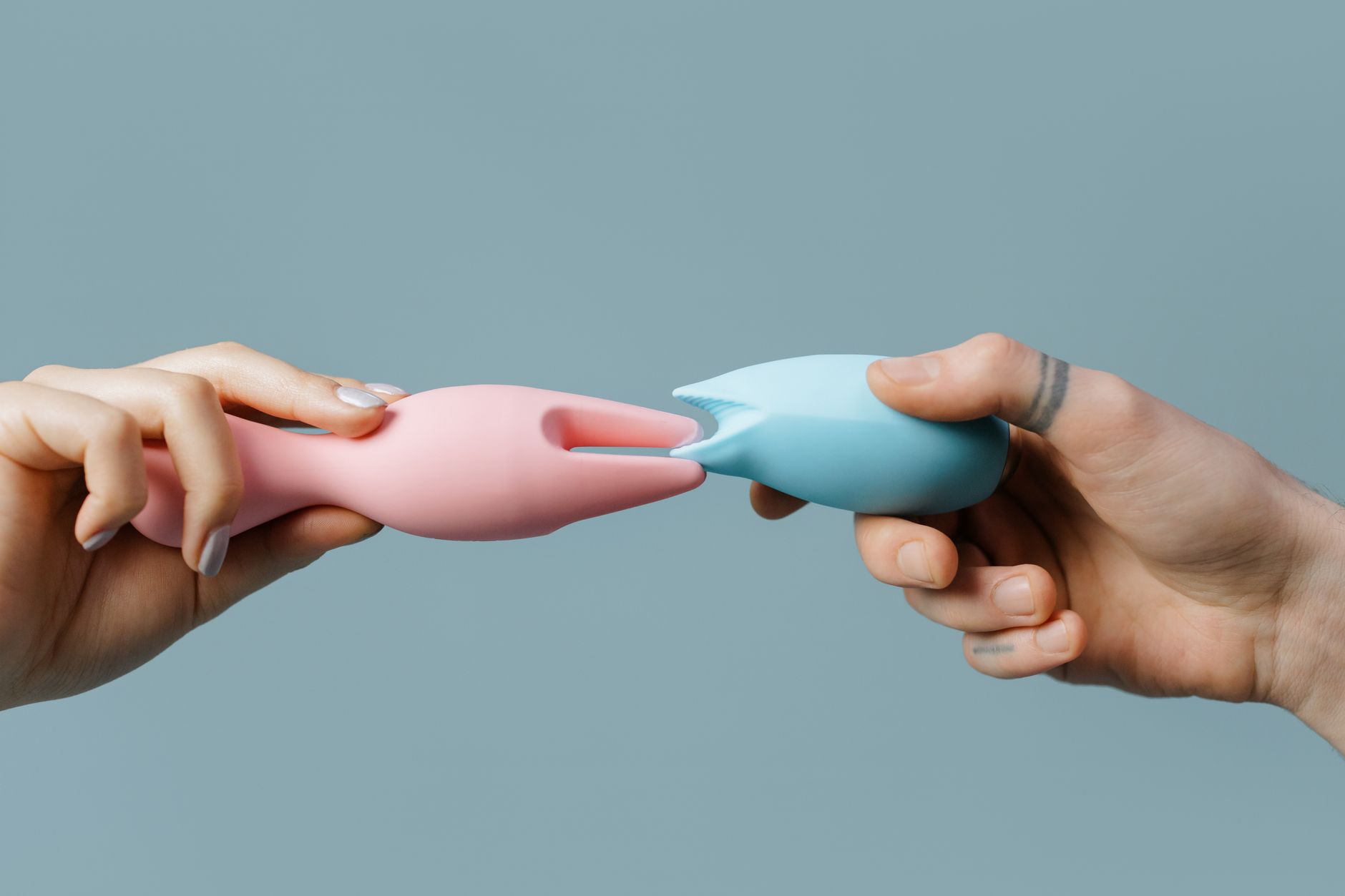
The thing nobody says out loud
Your partner is scared. Not of the toy itself, but of what they think it means. They're worried it means you're not satisfied. That they're not enough. That you'd rather be alone with it than with them. And because these are scary thoughts, they dress them up as logic: "Toys just make things mechanical." "It feels like cheating somehow." "I don't want our sex to be about gadgets."
None of that is actually about the toy. It's about what they believe the toy represents. That's the conversation that matters.
Why partners resist lemon vibrators (the real reasons)
I've sat with hundreds of couples where one partner brought up toys and watched the other person shut down. The resistance almost never comes from a place of actual objection to the object. It comes from three deeper fears.
Fear one: replacement. Your partner genuinely worries that you want a lemon vibrator because you'd rather have that sensation than their touch. This is almost always wrong, but it feels true to them, especially if you haven't explicitly explained why you want one.
Fear two: inadequacy. If you need a toy to orgasm, or to orgasm faster, or to orgasm more intensely, they read that as evidence they're not giving you enough. Their brain goes: "I thought I was good at this. Now I'm apparently not." It's painful, even if it's illogical.
Fear three: loss of control. Sex with a partner involves mutual vulnerability. A toy shifts that balance. Your partner loses some ability to read and respond to your body in real time. Some people experience that as a loss of intimacy, even though it's actually just a different shape of it.
None of these fears are crazy. They're just incomplete.
What actually happens when you introduce a lemon vibrator to partner sex
Let me be direct: your pleasure matters more than your partner's comfort with your pleasure. That's not negotiable. But the good news is that those two things aren't in conflict once you both understand what a lemon vibrator actually does to your shared experience.
A lemon clitoral vibrator doesn't replace your partner. It changes the equation in ways that usually make things better for both of you.
When you use a lemon vibrator with a partner, several things shift at once. First, you orgasm more reliably and often more intensely. That's the obvious part. But the second part matters more: you relax. You stop performing. You stop monitoring whether you're taking too long or worrying that your partner is getting tired. Those thoughts kill intimacy faster than any toy ever could.
Your partner gets to witness you in genuine pleasure instead of managed pleasure. That's wildly different. The intimacy isn't in whether you came from their body alone. It's in whether you're both present, both honest, both willing to prioritize the other person's actual experience over some arbitrary idea of how sex "should" work.
Lemon vibrators, specifically, feel less intrusive than traditional vibrators because the suction mechanism works with your body's natural arousal response instead of against it. You're not fighting the sensation. You're both building toward something together, just with an assist.
The conversation you actually need to have
Don't start with the toy. Start with the fear.
Pick a time when you're both calm and clothed. Say something like: "I've been thinking about using a lemon vibrator with you sometimes, and before I do that, I want to talk about what I think might worry you about it. I think you might worry it means I want you less, or that you're not enough. That's not what it is. Can we talk about that?"
Then listen. Actually listen to what they say, even if it sounds illogical to you. The point isn't to convince them they're wrong. It's to hear what they're actually afraid of.
After you've heard their worry, be specific about what you actually want. Not "I want to use a toy." But: "I want to orgasm more easily when we're together because right now I sometimes feel like I'm working too hard to get there, and that makes me tense. That tension actually makes me less present with you. I think using a lemon vibrator sometimes would let me relax into pleasure instead of chasing it. And I want that to be part of what we do together, not instead of what we do together."
That's specific. That's connected to intimacy, not away from it. That's true.
How to actually introduce it
Don't surprise your partner with a toy during sex. That's a violation of consent, even if you think it's playful. They've already said they're uncomfortable. Springing it on them anyway teaches them you don't listen when they express worry.
Instead, start by using the lemon vibrator alone while they're in the room but not engaged. You might masturbate while they watch, or simply use it while you're getting ready for partnered sex. This does two things: it demystifies the object, and it lets them see that you're still you. You don't turn into a different person. You just... feel good.
When you move to using it together, start slow. You might use it during foreplay while they touch you elsewhere. You might use it while they're inside you. You might use it while you're touching them. The point is that it's part of a shared experience, not a solo thing happening in parallel.
Notice what your partner is doing while you use the toy. Are they touching you? Are they watching? Are they present? Most partners find that once they watch their partner actually experience pleasure instead of managing pleasure, the fear starts to dissolve. It's hard to believe the toy killed intimacy when you're both breathing hard and looking at each other.
The signals to watch for (and how to respond)
Your partner might say they're fine with it but their body language says otherwise. They might seem withdrawn. They might make jokes that sound light but feel pointed. Watch for these signs that they're still carrying the fear.
If you see withdrawal, pause. Not forever, but in that moment. Say: "I notice you seem quiet. I'm checking in because your comfort matters to me." Then actually hear what they say. Maybe they need more reassurance. Maybe they need to process it outside of a sexual context. Maybe they want to try a different approach.
You're not responsible for managing their emotions, but you are responsible for creating enough safety that they can actually tell you the truth instead of performing agreement.
The long game
Lemon vibrators aren't a permanent fixture in every sexual encounter. You might use one sometimes. You might not use one for months. The point isn't that the toy itself is the goal. The point is that you both trust each other enough to explore what actually works, including tools that help you both feel better.
When your partner sees that introducing a lemon clitoral vibrator doesn't destroy your connection but actually deepens it because you're both more honest and more satisfied, something shifts. They stop worrying about toys as a threat and start understanding them as part of the toolkit of a couple that actually communicates.
That trust extends everywhere. If you can have a hard conversation about toys, you can have hard conversations about almost anything. And that's where real intimacy lives.
FAQ: partner resistance and lemon vibrators
Why does my partner feel threatened by a lemon vibrator when I explained it's just for better sensation?
Because you explained the logic, but they're operating from emotion. Your partner isn't being illogical by ignoring your explanation. They're being human. The fear that a toy means you want them less is deeper than words can reach. That fear needs to be acknowledged and heard first, before any explanation lands. Start with "I hear you're worried about this" instead of "here's why you shouldn't be worried."
Can I use a lemon vibrator if my partner refuses?
Yes. Your body is yours. That said, sneaking around with a toy creates way more distance than having the awkward conversation. You can use it alone without asking permission every time. You can also set a boundary that exploring your own pleasure matters, and you'll do it whether they're comfortable or not. Then they have to decide if they want to be part of that or not. Sometimes that decision happens faster when it's not optional.
What if my partner says it feels emasculating?
That's about his relationship to his own sexuality and his own sense of capability, not about you or the lemon vibrator. You can say: "Your worth as a partner isn't about whether I orgasm from your body alone. It's about whether we're both honest and both care about each other's pleasure. Using a toy doesn't change that." Then you both have to decide if that's a belief he can actually hold, or if he needs to work on it separately. You can't fix his insecurity with reassurance. He has to do that work.
Is it normal for partners to eventually enjoy using a lemon vibrator together?
Very normal. Once the initial fear passes, many partners find that watching their partner use a lemon clitoral vibrator is incredibly hot. They like the sounds. They like seeing you experience intense pleasure. They like that you're relaxed instead of tense. The toy stops being a threat and becomes part of what turns them on.
If my partner still refuses after we've talked about it, what does that mean?
It might mean he needs more time. It might mean he needs professional support processing his feelings about sexuality and inadequacy. It might mean this is a real incompatibility that you two need to sit with. What it doesn't mean is that you're wrong for wanting your own pleasure. That part doesn't change based on his comfort level.
How do I use a lemon vibrator with a partner if we're still rebuilding trust?
Slowly and with lots of communication. You might start by using it alone while they're present. You might talk about it beforehand every single time. You might use it for a few minutes and then check in. You're building new neural pathways of safety around this. That takes time, and it's worth taking.
The thing to remember
Intimacy isn't about which body parts touch which body parts. It's about whether you're both willing to tell the truth about what you need and whether you both care enough to help each other get there. Lemon vibrators don't kill that. They actually require it. You can't introduce something new without being honest about why. And that honesty, that willingness to be vulnerable about your own pleasure, is exactly what makes sex feel intimate.
Your partner's fear makes sense. But it doesn't have to win. You get to have pleasure. You get to explore. And your partner gets to come along or not, but not to stop you from knowing what feels good. That's the conversation that matters.