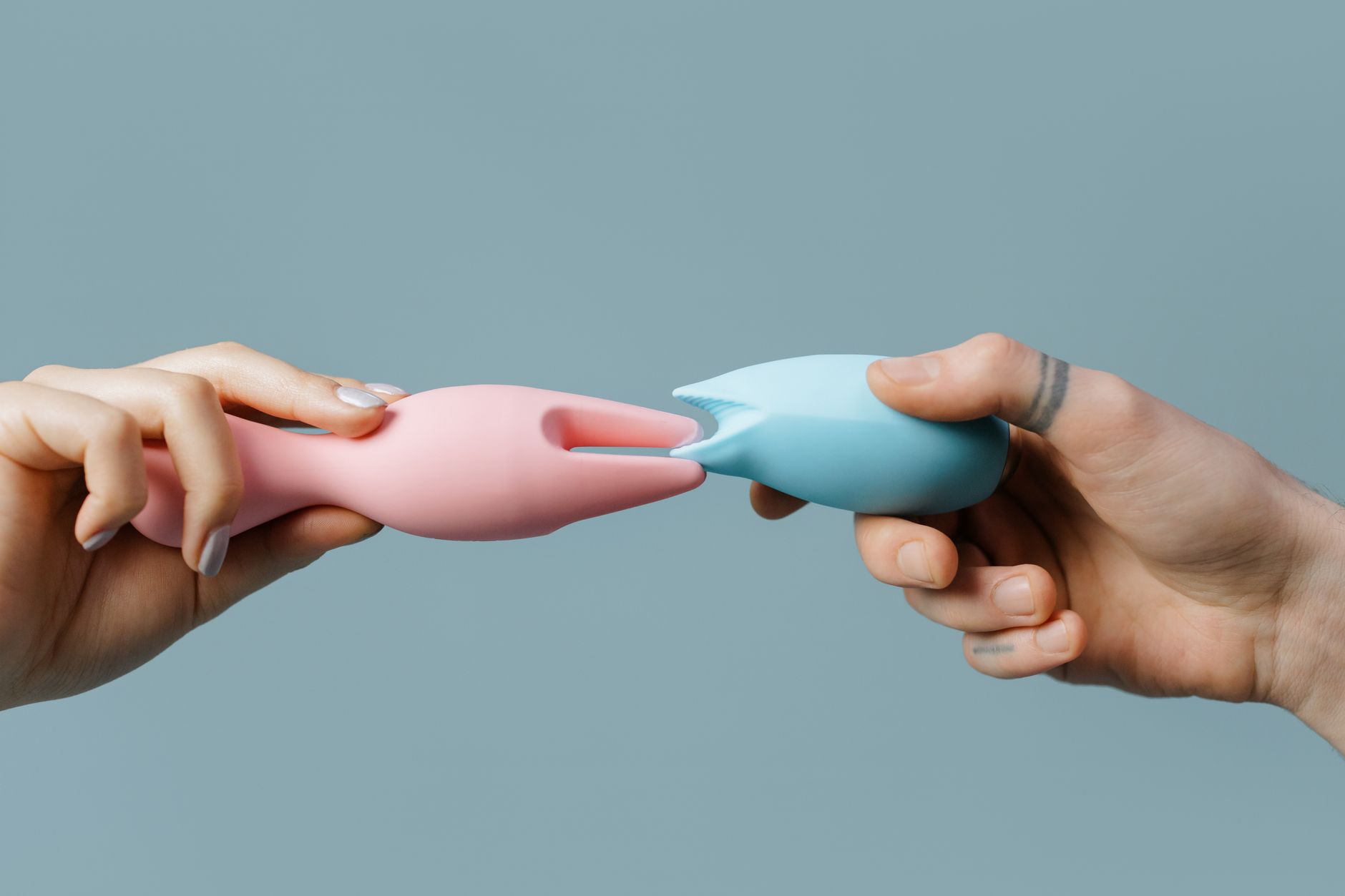
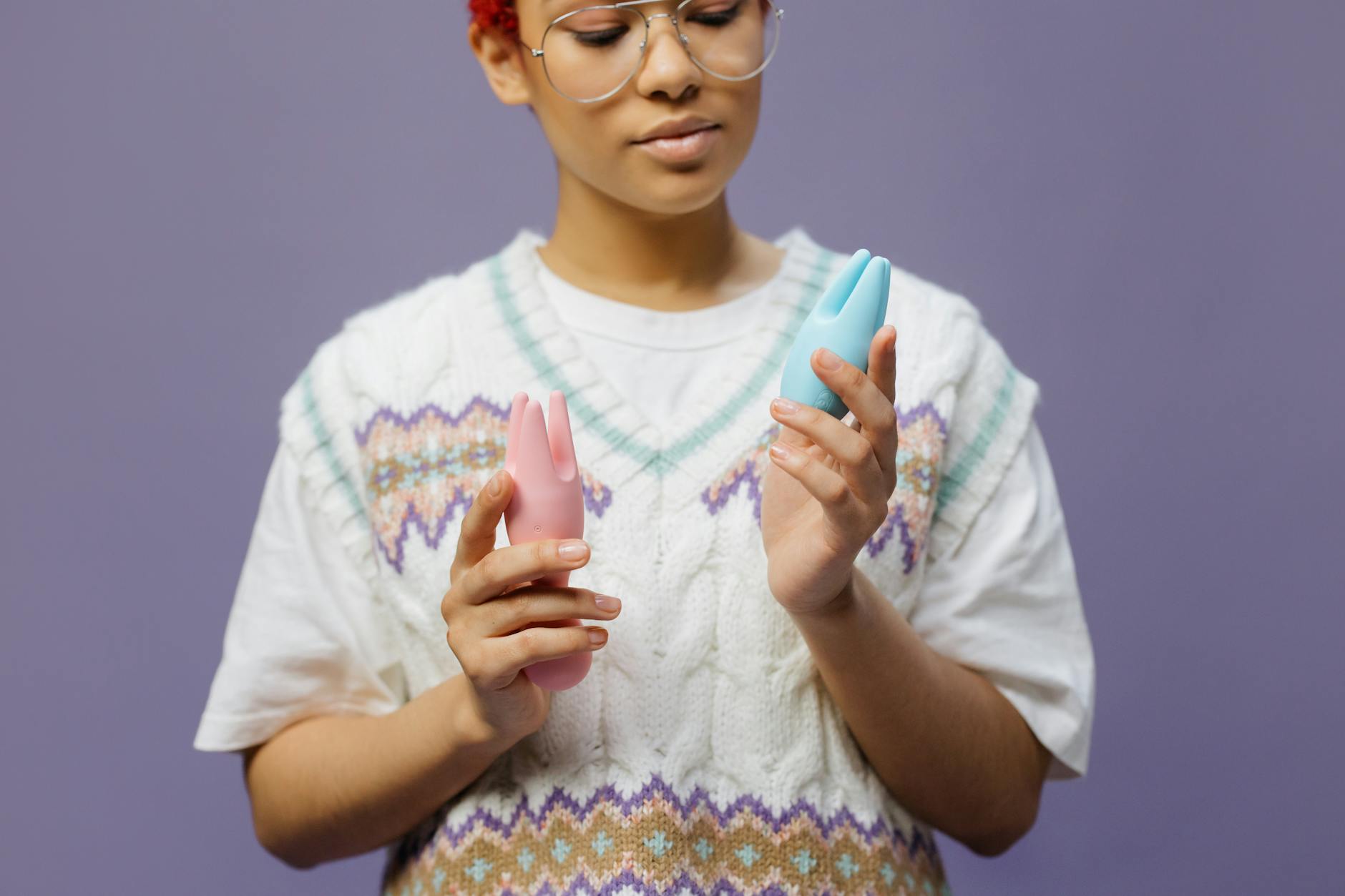
Why Lemon Vibrators Feel Different During Partner Sex After Solo Use
Your lemon vibrator solo feels like one thing. Introduce a partner and it feels like something else entirely. Here's what's actually happening neurologically, and why that's not a problem.
You've had your lemon vibrator solo a hundred times. You know its patterns. You know your body. You know what builds you toward orgasm in that particular, reliable way that solo play does. Then you bring a partner into the room, and suddenly the same vibrator feels fundamentally different.
Not broken. Not worse, necessarily. Just... different. Lighter somehow. Less direct. Or maybe it's too much. The intensity that felt perfect alone now feels like it's fighting with something else for your attention.
This is so common that I've stopped being surprised when clients bring it up. What surprises me is how many people think something is wrong with them, with their partner, or with the lemon vibrator itself. None of those things are true.
Here's the thing: your nervous system doesn't work in isolation. When you're alone with your lemon clitoral vibrator, you have what neuroscientists call a "closed loop" of pleasure. Stimulation goes in, your brain processes it, sensation builds, orgasm happens. It's a single circuit.
The moment someone else is present, your nervous system adds a second circuit. Now you're processing:
Touch that's not from the vibrator (hands, mouth, proximity)
Anticipation of what they might do next
Awareness of your own body in relation to theirs
Possibly some performance anxiety, even if it's subtle
Your brain is now juggling multiple sensory channels at once. The lemon vibrator's sensation, which was the sole focus during solo play, suddenly has to compete for your attention.
When you use your lemon vibrator solo, you control the rhythm entirely. You might start on pattern 2, shift to pattern 4 when you're ready, hold it for exactly 45 seconds, back off, build again. That responsiveness is yours alone.
With a partner, someone else's rhythm enters the equation. They're moving. They might be inside you, and their pace isn't the same as your vibrator's pace. Even if they're just watching, there's a psychological rhythm to their presence—anticipation, attention, the rhythm of their breathing.
Your clitoral vibrator is hitting you at a steady frequency (often around 80-100 Hz for quality lemon vibrators), but your partner's thrusting or movement might be 1-2 times per second. These don't sync up. Your nervous system has to process stimulation at two completely different rhythms, and that creates a kind of cognitive friction.
This is why some people find that pausing penetration and using the lemon vibrator alone while their partner is still present feels wildly different from using it solo. You've removed one sensory channel (the rhythm mismatch) while keeping the intimate presence.
Solo arousal and partnered arousal are biochemically different states. When you're alone with your lemon vibrator, your arousal builds on itself. It's recursive. Sensation creates arousal, which increases sensitivity, which deepens sensation, which builds more arousal.
With a partner, arousal often starts with their presence, their attention, their desire. That's a different neurochemical baseline. You might be 40% aroused from their presence alone before the vibrator even touches you. This sounds like it should make things easier, but it doesn't always work that way.
Sometimes that initial arousal from partnership makes the lemon vibrator feel too intense too fast. Other times it makes it feel diffuse, like the partner's attention is pulling your focus away from the direct sensation the vibrator provides.
The clitoris is incredibly sensitive to competing stimuli. If your partner is kissing your neck while you're using a lemon clitoral vibrator, that sensation at your neck isn't just "also happening." It's actually modulating how your clitoris processes the vibration. This is called gate control theory, and it means that pain, pleasure, and attention literally open and close the neural gates for other sensations.
If the vibrator feels less intense during partner sex, that's often not because it's broken or because you've lost sensation. It's because your partner's presence is triggering your parasympathetic nervous system (the relaxation response) in ways that solo play doesn't.
Relationship security, trust, and attachment actually suppress some of the fight-or-flight response that can sharpen sensation during solo play. This is a feature, not a bug. Solo arousal often has an element of urgency to it. You're chasing an orgasm. Partnered arousal, when it's good, has less urgency and more permission to relax into the experience.
However, relaxation makes you less sensation-focused. Your brain isn't in the same sharp, targeted state. The lemon vibrator's intensity feels different because your entire nervous system is tuned to a different register.
If this muting feels unwelcome, one strategy is to actively create a moment where you close your eyes and direct all your attention back to the vibration. Ask your partner to slow down. Ask them to pause and just be present with you. That parasympathetic calm is a gift, but you need to reclaim some focused attention for the vibrator to feel like it did solo.
Even in the most relaxed, communication-forward relationship, there's a performance element to partnered sex that solo play doesn't have. You're aware of how you look, how you sound, how long this is taking, whether your partner is enjoying it. That awareness, no matter how subtle, splinters your attention.
Your lemon vibrator feels different partly because some neural bandwidth is reserved for things that have nothing to do with pleasure: Am I being too loud? Does this position make my body look weird? Is he getting bored? These thoughts don't have to be loud to matter. They just have to exist in the background, and they do, for almost everyone.
This is why some couples report that the vibrator feels better when they explicitly agree beforehand that this is their moment. Nobody's performing. Nobody's monitoring the other person's response. You're just two people who agreed to let one of you have a very specific experience with a lemon vibrator while they support it.
Solo pleasure is reactive. Something happens; you respond. With a partner, there's a predictive element. You're waiting for them to do something. You're anticipating what might happen next. You're curious about their moves.
Anticipation activates different neural pathways than direct response does. It's not better or worse, just different. And it can make a lemon clitoral vibrator feel lighter, more distant, because some of your attention is genuinely elsewhere, in the future tense of what's about to happen.
If you want the vibrator to feel the same way it does solo, you sometimes have to reduce the anticipation element. That might mean asking your partner to simply hold still while you focus on the vibration. Or it might mean building a specific rhythm together where you can anticipate what they're going to do, which actually reduces that scattered-attention feeling.
First, know that this shift isn't a sign that something is broken between you or in your body. It's your nervous system doing exactly what it's supposed to do: processing multiple channels of input at once.
If the lemon vibrator feels too muted during partner sex, try these in order:
Close your eyes. Remove visual input. Let your clitoris and partner's touch be the only two sensations. This often makes the vibrator feel sharper again.
Ask for stillness first. Have your partner be present but not moving. Just the vibration plus their attention. Add their movement once the vibrator feels right.
Use a higher intensity pattern. You might genuinely need more Hz during partnered sex because your nervous system is in a different mode. The Lem's patterns 5-7 often feel very different from patterns 1-3 in partnered contexts.
Build a shared rhythm. Instead of fighting the two rhythms (theirs and the vibrator's), sync them. Ask them to move at the vibrator's rhythm or to pause between cycles. This eliminates the competing-tempo problem.
Communicate about what you need beforehand. Not during. Before. "I want to use the vibrator, and I'll need you to stay mostly still for the first few minutes while it builds sensation." This takes the guesswork out of what feels good.
Your lemon vibrator isn't different. Your body isn't broken. Your nervous system is simply, elegantly, doing what nervous systems do: adapting to context. Understanding why the context changes the sensation is the first step to making partner sex with a vibrator feel as good as solo play does.
Your nervous system is dividing attention between the vibration and social awareness. You're processing your partner's presence, potentially their judgment (even if they're completely supportive), and the performance aspect of being observed. This splits neural bandwidth away from sensation focus. Solo attention is singular; partnered attention is divided. Try closing your eyes or explicitly discussing beforehand that you need them to simply be present, not engaged, while you reconnect with the vibrator sensation.
Often, yes. During solo play, patterns 2-3 might feel perfect because you're in a highly focused, sensation-targeting state. During partnered sex, that same intensity can feel diffuse because your nervous system is processing more input overall. Many people find that they need pattern 5 or higher during partner play to achieve the same sensation intensity they get from pattern 3 solo. Experiment without judgment.
Completely normal. Solo pleasure is simpler neurologically. There's less to manage. You're not coordinating with another person's rhythm, attention, or expectations. Some people genuinely prefer the clarity and control of solo vibrator use. That doesn't mean partnered play is wrong; it just means solo play is your preference. Both are valid.
Start with the science you've learned here, not with logistics. Instead of "I want to use my vibrator during sex," try "I've noticed that the vibrator feels different with you than without you, and I want to understand why. Can we try using it together and see what happens?" Frame it as curiosity, not as filling a gap. Many partners relax when they understand that the vibrator isn't a replacement; it's another tool for shared pleasure. If discomfort persists, see the internal link on how to use a lemon vibrator with a new partner when you're nervous about toys.
Yes, with intention. Close your eyes to reduce visual stimuli. Ask your partner for stillness initially. Use a higher intensity pattern. Build shared rhythm. Create a contract beforehand about what you need. The sensation won't be identical because the context is different, but you can recreate the focus and intensity by strategically removing sensory channels and neural distractions. The goal isn't sameness; it's achieving the specific pleasure state you want in this new context.
No. While psychology plays a role, the difference is also neurobiological. Your parasympathetic nervous system responds differently to a partner's presence. Your brain is processing multiple sensory channels simultaneously. The rhythm mismatch between a vibrator and your partner's movement creates genuine competing stimuli at the neural gate level. It's not "just" psychological; it's a real shift in how your body is functioning in that moment.